Insights
What to Expect at Project Controls Expo USA 2026
ProjectTeam is a platinum sponsor of Project Controls Expo USA 2026 at Nationals Park, October 5 to 7. Here is where to find us.
Sharing lessons on successful project controls implementation from construction management experts during the Project Controls Expo USA 2026.
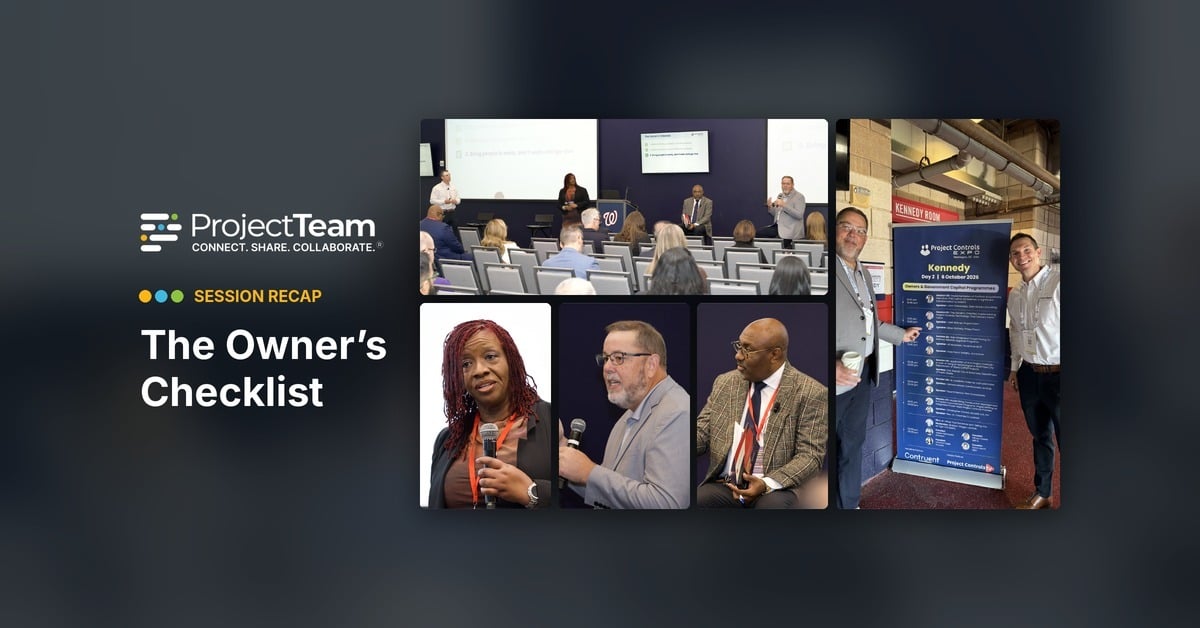
During the Project Controls Expo USA 2026 in Washington, DC, ProjectTeam's VP of Product, Josh Witmer, moderated a panel with owners and construction managers. They discussed how to implement project controls technology successfully and shared lessons learned. Continue reading to learn Josh's takeaways from the session.
This past week, I had the chance to moderate a session at Project Controls Expo called “The Owner’s Checklist: Implementing Project Controls Technology That Delivers Public Value.” I wanted the panel to cover the full picture, so it included people from the owner side, the CM/consultant side, and the vendor side:
Fewer than 1 in 3 digital transformations succeed. In most cases the software isn’t the problem. What breaks down is everything around it. The problem isn’t clearly defined, the system doesn’t fit how people actually work, users get involved too late, or nobody keeps improving the system after go-live.
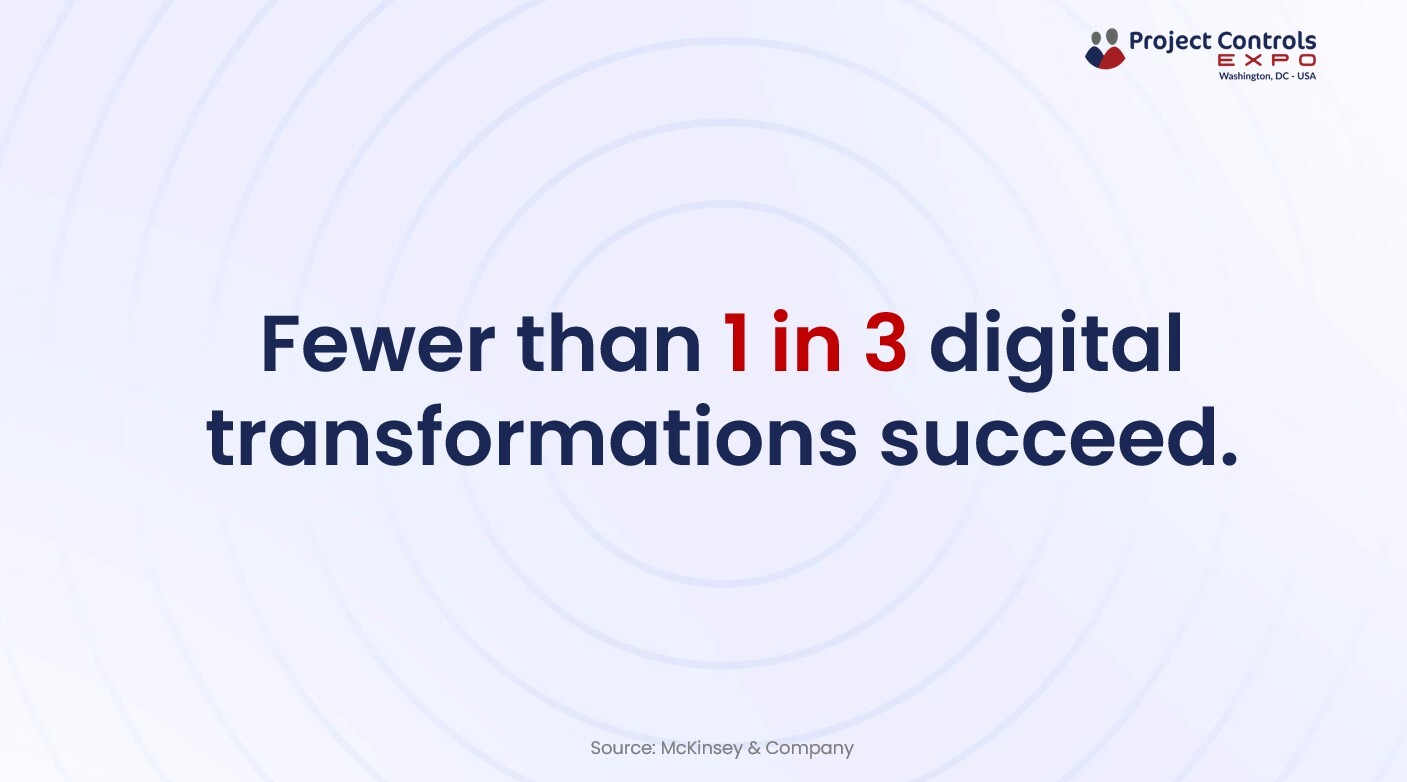
So we built the session around a five-item checklist for owners who want to be in that 1 in 3. Here’s what the panel had to say about each one.
Cassandra has implemented ProjectTeam twice, first at DC DGS and later at DC FEMS, and the two projects looked very different.
DGS was a huge effort. It meant supporting a capital budget of more than $3 billion, migrating over 10 years of data from a legacy system, and bringing in external stakeholders from across the DC area. It touched everything.
FEMS was more internal. The focus was on financial tracking and budget approval workflows more than traditional construction management, so the work centered on configuring the system to fit the agency’s specific needs.
Same platform, very different goals. Being clear about what each agency was trying to solve shaped everything that came after. Omar added that from the CM side, it’s much easier to work with owners who come in with a clear problem statement and are willing to work through the right solution.
I asked Omar how his team handles needs the standard setup doesn’t cover. He pointed to a recent example on the DC PLUG project. The owner already had a system in place, but it couldn’t be configured to track inspections and reports the way the project required. Instead of forcing the team to work around it, they added ProjectTeam alongside it to fill that gap. The lesson: your process should drive the tool, not the other way around.
Brian talked about the value of building a group of “champions” early on. These are the people who help define how the system should work, based on real day-to-day use cases. He also stressed understanding the range of technical comfort across your users, since an implementation that works for your most tech-savvy people can fall flat for everyone else.
We also talked about phased rollouts. Start with the projects and teams that are most eager to try something new, use them to prove out what’s possible, and work out the early wrinkles before expanding to the rest of the organization.
Brian has seen hundreds of rollouts, so I asked him what a structured one looks like. Beyond the checklist items, he made a point I think owners don’t hear often enough: some of the responsibility sits with the vendor. An owner’s RFP usually captures the high-level needs. Getting to a successful implementation means digging deeper than that, and it takes an experienced implementation team and a flexible product to adapt as those deeper needs come out.
This one turned into an open conversation, and each panelist brought a different angle from their side of the table. The common thread was that go-live isn’t the finish line. Systems that don’t keep evolving with the organization tend to get abandoned, and then you’re back to square one.
We closed with a quick discussion on AI, and the three perspectives were a good snapshot of where the industry is right now:
After the session, we invited attendees to a ProjectTeam AI demo where we walked through several real use cases. Thanks to everyone who stuck around for that.
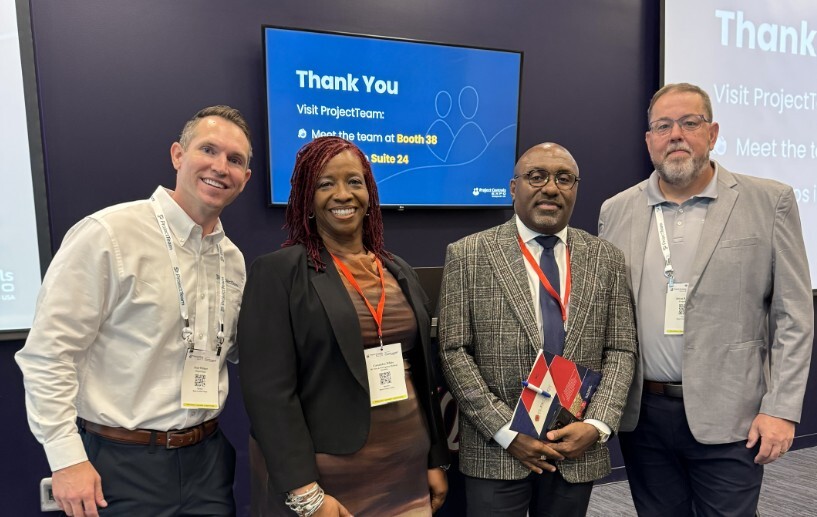
A big thank you to Cassandra, Omar, and Brian for sharing honest, practical experience, and to everyone who attended and asked questions. If you’re an owner planning a project controls rollout and want to talk through any of this, feel free to schedule a demo.
ProjectTeam is a platinum sponsor of Project Controls Expo USA 2026 at Nationals Park, October 5 to 7. Here is where to find us.
Discover how ProjectTeam.com empowers true collaboration in construction project management by allowing multiple organizations to connect, customize...
A Common Data Environment done right keeps all parties in control of their data while sharing a single project record. See how ProjectTeam.com...